The short answer
GOV.UK has no area of North Macedonia where it advises against travel. It says attacks against foreign nationals are extremely rare. Its advice was updated on 13 August 2026 and was still current when we checked on 25 October 2026. Wikivoyage, a secondary source, describes the country as safe and advises watching for pickpockets.
This page is an independent guide, not official advice. Read the GOV.UK safety page before you travel, because it changes.
What GOV.UK says about Matka
Nothing. Its North Macedonia pages carry no advice on Matka Canyon, and none on hiking, taxis or boats. Everything about the canyon below comes from the travel guides we cite, not from the government.
Crime
GOV.UK says there are occasional shooting incidents, including in Skopje, but they are not targeted at foreign nationals. It also says organised crime groups are active, particularly in northern areas near the border with Kosovo. A Matka day trip from Skopje does not take you there. GOV.UK asks visitors to make sure their personal possessions are secure.
Terrorism and protests
GOV.UK says terrorist attacks in North Macedonia cannot be ruled out, and could be indiscriminate, including in places visited by foreigners. It says occasional protests can cause disruption, and advises avoiding crowds. If you meet one, walk away and check your route to the bus station.
Roads and driving
If you hire a car for Matka, GOV.UK says driving standards and road conditions vary widely and accidents are common. It names fines for not using side lights or dipped headlights, including by day, for using a phone while driving, and for not wearing a seatbelt. Drink-driving is a serious offence. After an accident, do not move the vehicle until the police have recorded it. Hire companies often have stricter requirements. Our getting there page covers the alternatives. GOV.UK also says there can be thick fog in Skopje and the surrounding areas from November to February.
Wildfires and heat
GOV.UK says wildfires are possible from April to October because of the dry, hot weather, and are highly dangerous and unpredictable. Do not light fires or barbecues except in designated, marked areas. It adds that the government commonly bans entry to forest and wilderness areas in summer, with severe fines. Call 112 if you see a fire. Check best time to visit before you book a summer trip, and see GOV.UK for any current ban.
Safety at the canyon
These points come from the guides on our other pages, so they are reports, not official warnings.
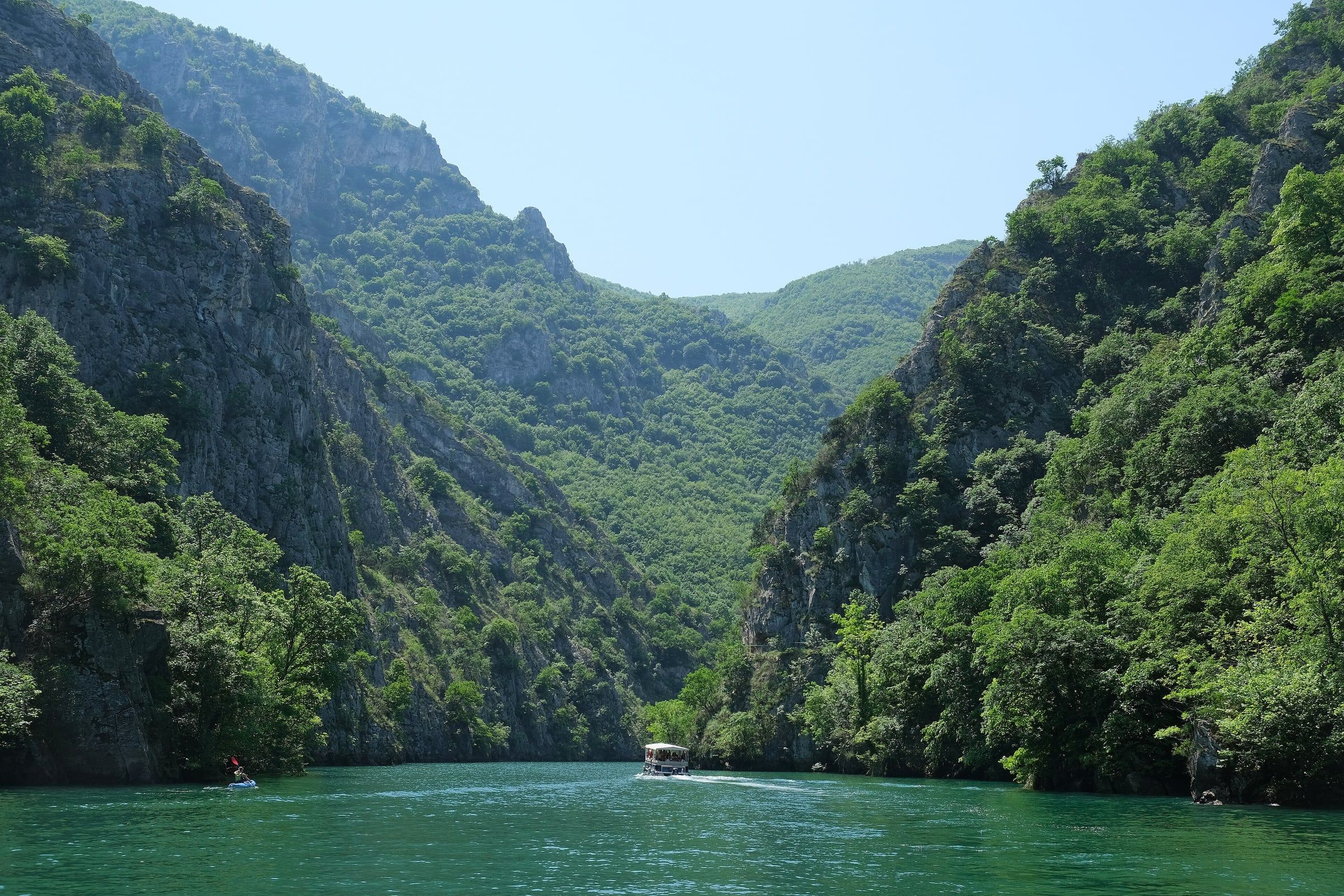
- Cliff paths. Hole in the Donut describes narrow sections where passing is hard, an iron railing that gives little protection and washed-out patches with drops towards the lake. Our hiking guide has the detail.
- Footwear. Passport Symphony says trails turn slippery in autumn and winter. Wear shoes with grip, not flip-flops.
- Water. MacedoniaTOP advises against treating the reservoir as an ordinary swimming beach. The Blog Trotter says the water is cold even in summer, and Third Eye Traveller found it very cold in September.
- Kayaks. Third Eye Traveller warns that wash from larger boats can tip a kayak. See boat and kayak.
- Life vests. One guide says one is provided on the cave tour. Others do not mention them, so ask.
- Phone signal. MacedoniaTOP says not to rely on it as your only navigation.
Emergency numbers and insurance
GOV.UK lists 112 as the general emergency number, 192 for police, 194 for an ambulance and 196 for roadside assistance. It says to research your destinations and get travel insurance that covers your itinerary, planned activities and expenses in an emergency. Check yours covers hiking and kayaking if you plan either.
A sensible checklist
- Read the GOV.UK safety and warnings pages in the week you travel.
- Buy insurance that covers your planned activities.
- Keep your bag and phone secure.
- Wear shoes with grip and take water on the canyon paths.
- Keep away from drops, and do not swim as if it were a beach.
- Save 112, 192 and 194 in your phone.
- Read practical information and entry requirements for the rest.